

Description
Design
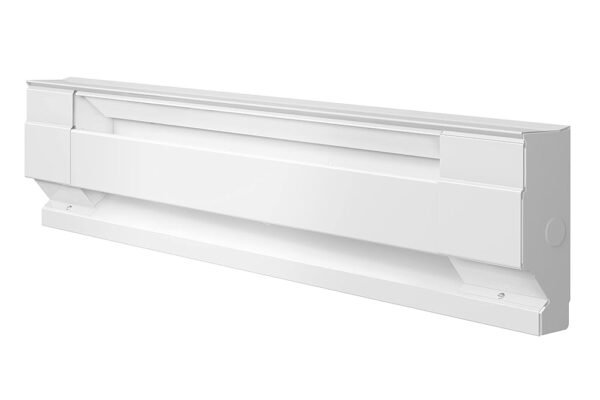
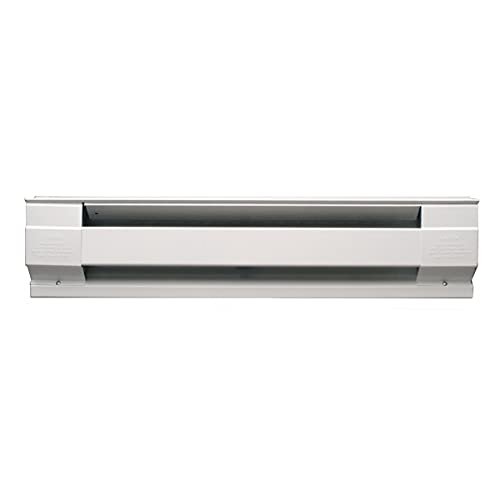
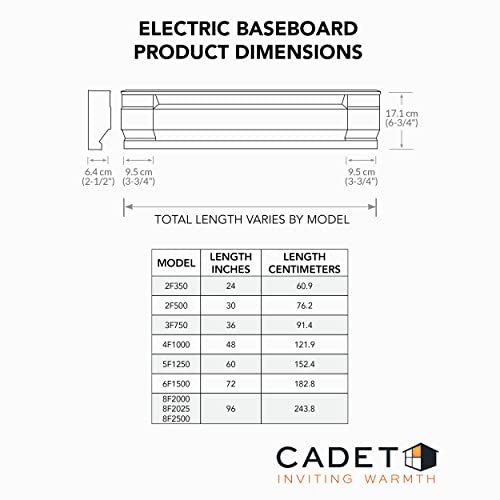
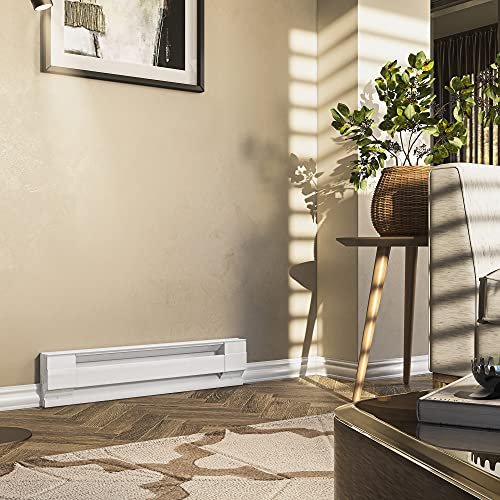
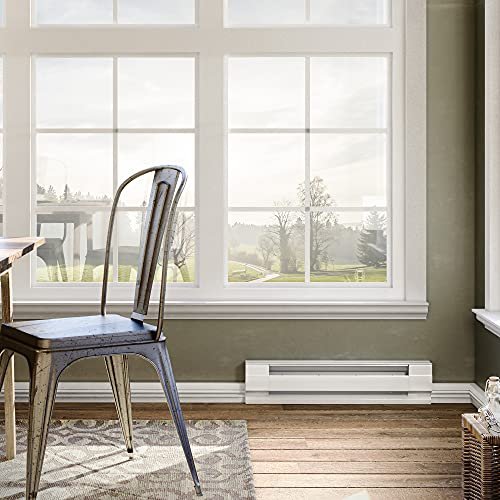
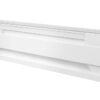
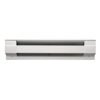
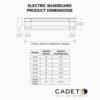
The Cadet F Series 30″ Electric Baseboard Heater (Model 2F500-1W, Part 05530) uses a clean, minimalist rectangular profile that blends into most interiors. The white finish is unobtrusive enough to suit a bedroom, home office or study without drawing attention. At just 2.5 inches deep it does not protrude awkwardly, which is what makes it viable under a window or along a wall where a floor standing unit would be in the way. At 6.3 pounds the unit is light enough that installation is a one person job.
Build quality is better than the low weight suggests, with a rigid metal casing rather than something that flexes under hand pressure. The point worth flagging is shipping: owner reports include units arriving dented or damaged, which is a packaging issue rather than a manufacturing one, so inspecting the unit on arrival is worth doing before installation begins.
Features
The feature list is focused. Automatic shut off is the headline, providing protection against overheating on a unit designed to be permanently installed and largely forgotten. As an electric radiant heater it delivers consistent warmth to spaces up to 50 square feet, which suits a small office or a bathroom rather than a living room.
The unit runs at 500 watts on 120 volts, delivering 1710 BTUs. There is no built in thermostat, which will be a dealbreaker for some, though an external thermostat installs without difficulty and the compatibility for such additions is a genuine advantage. Wiring options at both ends give flexibility during installation. Owner reports mention discrepancies in the wiring diagram, which is worth knowing about for anyone less familiar with electrical work.
How To Use
Operation is simple once installed. The unit mounts to the floor and connects to a compatible thermostat to regulate temperature. There is no on off switch and no settings to navigate, which is refreshingly straightforward for a permanently installed appliance. In a small bathroom the unit holds the space warm without overheating it once the thermostat is set correctly, which does take some trial and error over the first few days.
The absence of onboard controls means everything runs through the thermostat. That is a limitation for some buyers and an advantage for others, since fewer components on the heater itself means fewer things that can fail.
Performance
Output is adequate and consistent. The unit warms up quickly and distributes heat evenly across its coverage area. In a 10×5 foot bathroom the space becomes noticeably warmer within minutes, and across several hours of continuous running it holds a steady temperature without making the room uncomfortably hot, which is characteristic of a low wattage radiant design.
It is not the right choice for a larger room. A 500 watt capacity limits its reach, and buyers should size against that figure rather than the physical length of the unit. Baseboard heaters are older technology than the ceramic and infrared designs that dominate the market, but they remain a reliable option for supplementary heating in small spaces.
Maintenance
Upkeep is minimal. The white finish does not show dust readily, and a wipe with a damp cloth keeps it looking new. Because there are no fans and no moving parts, there are no vents to clear and no filters to replace, which removes the maintenance burden entirely. The one caution is during installation, where the metal casing can be bent or dented if handled roughly; it is sturdy rather than indestructible.
Noise
The unit is completely silent. With no fan and no moving parts there is nothing to generate sound, which puts it in a different category from every forced air heater on the market. In a home office or a study where focus matters, the only indication the heater is running is the warmth itself. For anyone sensitive to noise, that alone justifies choosing a baseboard design over a fan heater. A comparably silent panel is covered in our ENVI EM1012P review.
Safety
Safety specification is appropriate for a permanently installed unit. Automatic shut off prevents overheating, which is the cutout that matters most on a heater that stays connected through a season. The exterior stays cool enough to touch after hours of running, warm rather than dangerously hot, which reduces contact burn risk in a child’s bedroom. Standard practice still applies: keep flammable items such as curtains and furnishings at a safe distance from any baseboard heater.
Warranty
The product includes warranty coverage, though the terms are not clearly stated on the packaging. Cadet’s customer support is generally described as adequate, but owner experiences vary, and some reports mention friction with returns and restocking fees. Confirm the current terms with the seller before purchase and keep proof of purchase accessible, since a permanently installed unit is harder to return than a portable one. Cadet also builds the wall unit covered in our CSC151TW review.
Usability
Usability is a strength once the electrical work is complete. With a suitable thermostat in place the unit requires no ongoing attention at all. Installation is straightforward for anyone with basic electrical knowledge, though it is not a task for someone with none. The format is versatile enough to suit bathrooms, small offices and bedrooms equally.
Advantages
- Silent operation, well suited to quiet spaces.
- Compact design that fits into small rooms.
- Easy to maintain with no moving parts or filters.
- Reliable safety features, including automatic shut off.
- Heats up quickly and maintains consistent warmth.
Critiques
- Limited heating capacity, making it unsuitable for larger rooms.
- Requires an external thermostat for temperature control.
- Occasional issues with shipping damage and packaging quality.
- Wiring instructions may be confusing for some users.
- Lack of built-in controls might be inconvenient for certain setups.
Competing Products
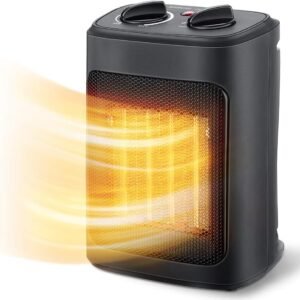
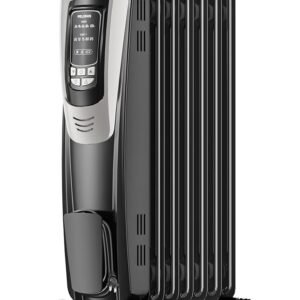
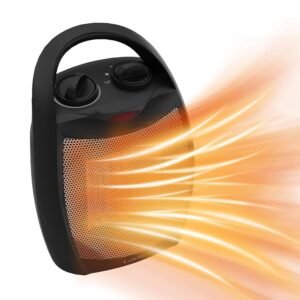
Across the electric space heater category this unit sits as a solid mid range choice. Fan based heaters such as the Lasko 754200 ceramic heater offer faster warm up and built in thermostats but run noticeably louder. Oil filled radiators such as the De’Longhi TRH0715CA distribute heat more evenly across larger rooms but are bulkier and less efficient for a small space.
What separates this unit is the combination of silent running and a permanently installed low profile design, which suits small, quiet rooms better than any portable alternative. For larger areas or for buyers wanting onboard controls, other options are the better route.
Affordable Quality
For its price this heater offers reasonable value. It is a budget option for heating a small space, and while it lacks the features of more expensive models, it delivers dependable output and proper safety hardware. For anyone on a tight budget needing a straightforward, permanent heating solution in a small room, it is worth considering.