




Description
Maintenance
Keeping the KIDEE Q22 space heater in good condition is straightforward. Dust gathers on the vents fairly quickly on any heater used daily, and a soft dry cloth on the exterior plus a small brush through the vent slats covers the job. It is worth knowing before purchase that this heater has no removable filter, so deep cleaning is limited to what can be reached from outside. On a unit this compact that is a minor limitation rather than a real problem. Standing it on a clean, flat surface rather than carpet also cuts down on the amount of debris it draws in.
Safety
Safety belongs at the top of the checklist on a heater this size, and the Q22 covers the standard ground. Tip-over protection matters most in households with pets or kids, cutting power the moment the unit leaves upright, and mechanisms of this type on lightweight heaters trip on a light knock rather than needing a full fall. Overheat protection handles extended running, shutting the heater down before internal temperatures climb too far. The UL-certified design and fire-resistant materials indicate safety was built into the Q22 rather than bolted on. None of that removes the need for basic attention while it runs; no safety feature replaces attentiveness.
Noise
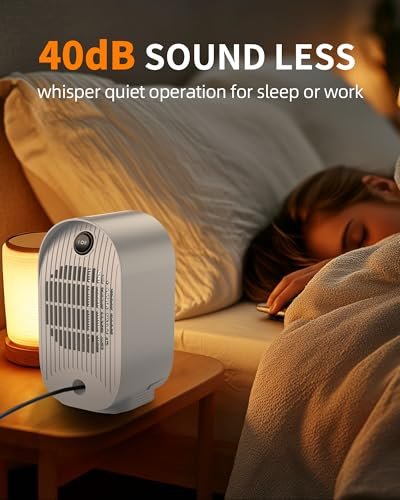
The Q22 runs quietly enough to sit in a small office without becoming a distraction. Even on the higher heat setting the sound stays a gentle hum, barely noticeable unless you are sitting right next to it. That is characteristic of PTC ceramic units, which pair a fast-heating element with a modest fan rather than pushing air hard across a coil. For bedroom use the noise profile should not interfere with sleep, and it is unlikely to unsettle a nervous pet.
Design
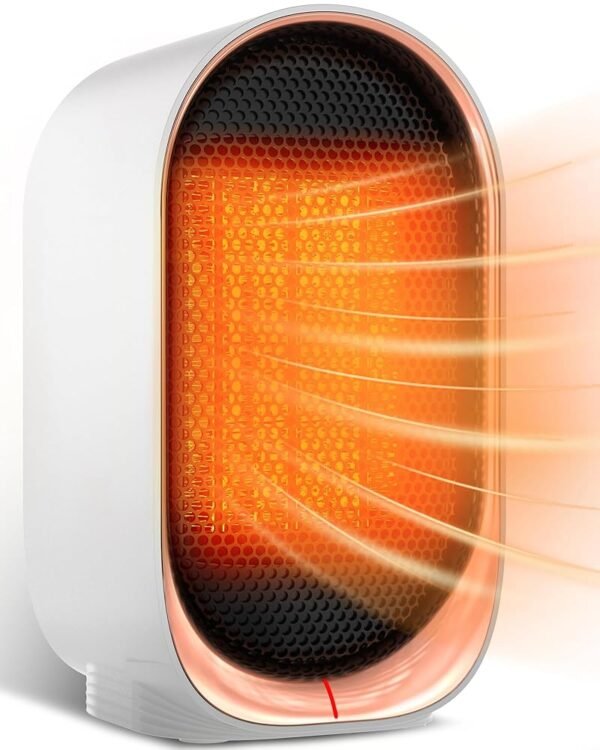
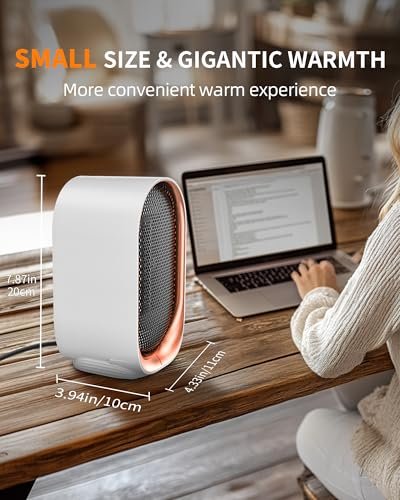
The design of this compact heater is minimalist and sleek. The white finish blends into most indoor settings without drawing unnecessary attention. The lightweight build combined with the carry handle makes it easy to move from room to room, and at 4.4”D x 5.5”W x 8.5”H it is small enough to fit on a desk or under a table. The compromise is in materials: the plastic casing lacks a premium feel, which is consistent with the price bracket. It remains functional and visually appealing for what it costs.
Features
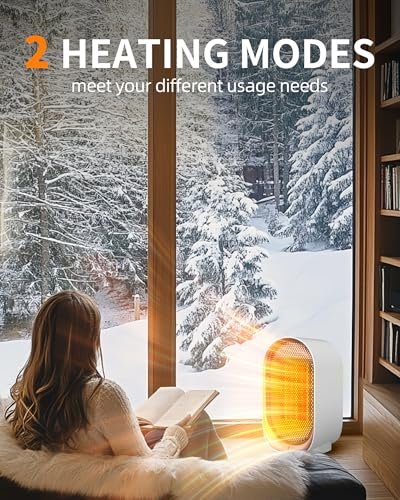
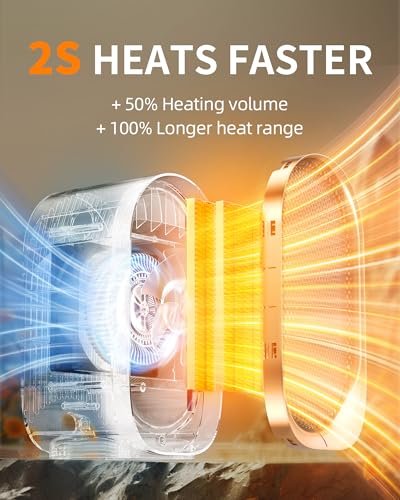
The Q22 keeps to two heat modes. The low setting suits mild days when a room needs a nudge rather than heating, while the high setting delivers the output for genuinely chilly mornings. Advanced PTC ceramic technology is why warm air arrives within seconds of switch-on. The 4-foot power cord is worth noting, since it gives real flexibility over placement and removes the temptation to run an extension lead, which is poor practice with resistive heating loads. The obvious omission is a remote control, which several similarly priced compacts in our electric space heater reviews do include.
Usability
Setting up this heater is as simple as plugging it in and switching it on. The controls are intuitive, with two heat settings to choose from and nothing else to learn. The low weight is a genuine convenience, making it practical to move between an office, a bedroom and a bathroom for chilly post-shower moments. The size sets the expectation: this is a personal or small-room heater, and it will not bring a large living room up to temperature. Buyers who need that should be looking a full 1500W class up.
Advantages
- Compact and portable, ideal for small spaces like desks or bedrooms.
- Features advanced safety mechanisms, including tip-over and overheat protection.
- Operates quietly, making it suitable for offices and bedrooms.
Areas for Improvement
- The lack of a remote control could make it less convenient for some users.
- Not powerful enough to heat large rooms or open spaces.
- The plastic casing feels slightly less durable compared to premium options.
Performance
Performance is respectable for the footprint. In a room of roughly 10 by 12 feet the temperature climbs noticeably within a few minutes, which is what the specification implies for a compact PTC unit in that space. It is not designed for large rooms, but for personal use or a small space it does what it claims. The ceramic heating element provides steady, energy-efficient warmth without the cycling glare of an exposed coil, which is why this element type dominates the small heater market. Buyers comparing coverage at this size often look at the Oprunsy PTC-SH008 mini ceramic heater as well.
How To Use
Using this heater is as simple as the category gets. Place it on a level surface, plug it in, and select the desired heat setting with the dial. The built-in safety features are what make it reasonable to run in a high-traffic part of a home, though positioning it at least a foot away from walls and furniture is still the right practice, since restricting airflow around the intake is the usual cause of a heater tripping its overheat cut-off.
Competing Brands
Compared with other mini heaters such as the Lasko MyHeat 100 and the Honeywell HeatBud, the KIDEE Q22 holds its ground quite well. The Lasko runs slightly quieter but carries a thinner safety specification. The Honeywell is a shade more compact and correspondingly lower in output. Buyers cross-shopping at this size will also come across the ASNUG Q21 and the BLACK+DECKER BHD101W, both aimed at the same desk and small-room duty. The Q22’s case rests on the balance it strikes between portability, output and safety provision.
Cost-Effectiveness
Weighed on features and rated performance, the KIDEE Q22 is priced sensibly. It is not the cheapest option out there, and the safety specification accounts for most of the difference. Against other models in a similar price range it offers reliability and efficiency without a premium. For anyone seeking a budget-friendly heater for a desk or a small room, the numbers add up.