

Description
Performance
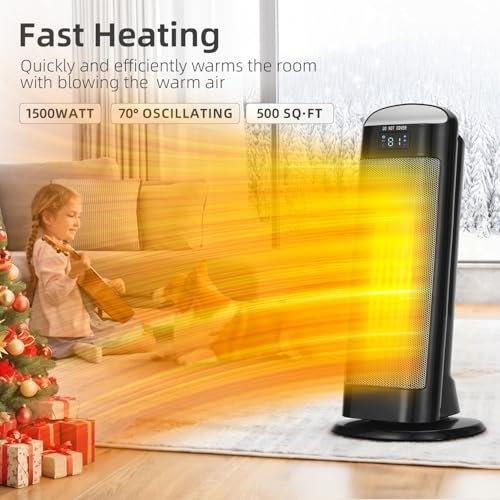
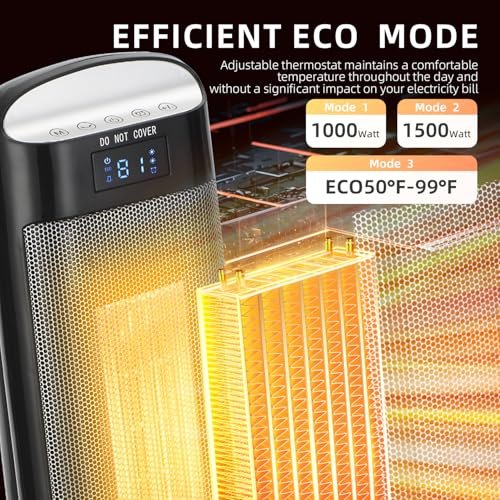
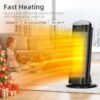
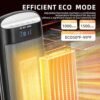
The Uthfy HPC-F2012YL is built as a cold-season workhorse, and the specification supports that framing. The ceramic heating element reaches temperature quickly, which is the defining advantage of PTC designs over oil-filled radiators. Three heating modes cover most situations: 1000W and 1500W settings plus an ECO mode that modulates output against room temperature. ECO is the setting that makes sense for taking the chill off a room rather than heating it hard, while 1500W is what the unit is for on genuinely cold nights. The rated coverage of 500 to 1000 square feet deserves scrutiny, though. That figure assumes reasonable insulation and standard ceilings, and in a room with high ceilings or poor sealing the real-world result will fall well short of the upper number.
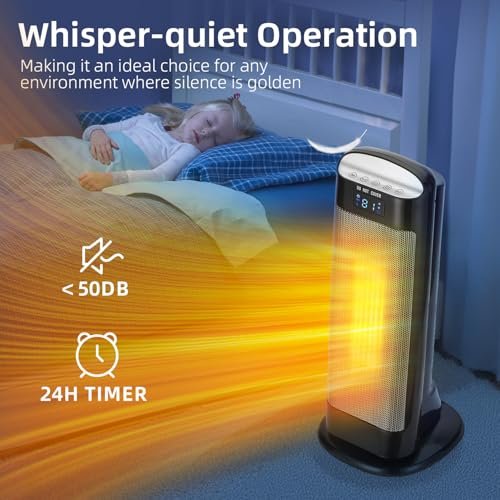
The oscillation feature spreads warmth across the room rather than aiming it in one direction, which reduces the cold spots that fixed-direction heaters leave behind. The fan is rated for quiet running, so the unit is designed to sit in the background rather than announce itself. For anyone comparing options across the electric space heaters category, oscillation plus a modulating ECO mode is the combination that separates mid-range towers from basic units.
Noise
Quiet operation is one of the model’s stronger selling points. Owner feedback places it well below the fan whine that makes cheaper units unusable during calls or overnight, and it stays unobtrusive at working volume. One consistent note in that feedback is a slight click from the thermostat when the unit switches between modes, which is the relay cycling rather than a fault. It is audible in a silent room but not disruptive.
Design
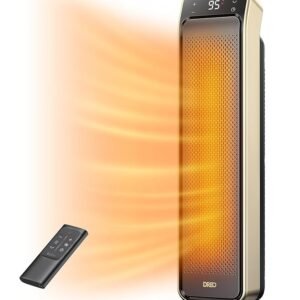
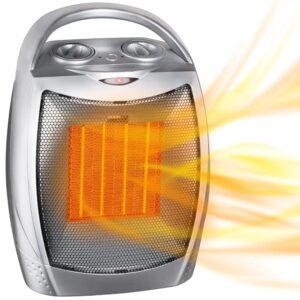
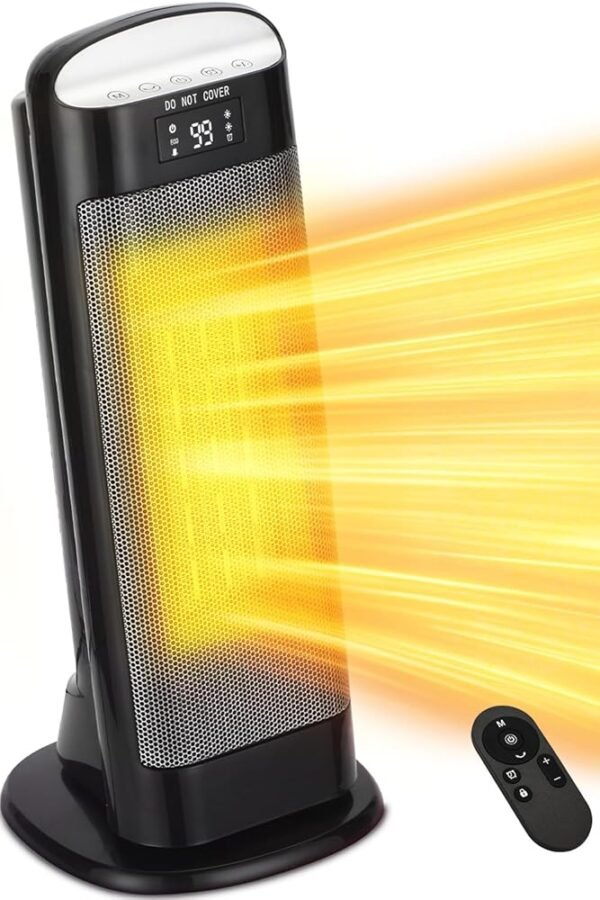
The slim tower design is built to disappear into a room rather than stand out in it. The black and silver colour scheme reads modern without being loud, and at roughly 19 inches tall the unit is compact for its rated output. Light weight makes it genuinely portable between rooms, and the digital display is legible from across a space rather than requiring a close look. The one recurring criticism in owner feedback concerns the plastic casing, which is described as feeling less substantial than the price suggests. Reports of units surviving knocks without cracking are common enough, but the tactile impression does not inspire confidence.
Features
The feature set is well judged for the money. The adjustable thermostat covers 50°F to 99°F, and the unit cycles off on reaching the set point and back on when the room drops below it, which is what separates a thermostat from a simple power switch and is where the energy savings actually come from. The remote control is the feature most owners cite as changing daily use, since it removes any reason to cross the room to change a setting. A 24-hour timer handles automatic shutoff, which matters for a heater that might otherwise run all night after someone falls asleep.
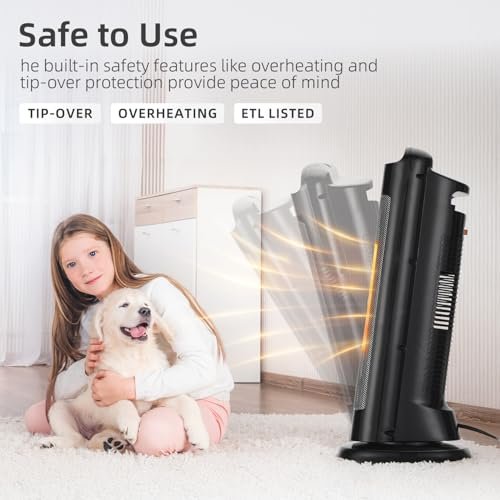
Safety is properly specified. Tip-over protection and overheat shutoff are both present, which is the minimum worth accepting in a home with children or pets, and the flame-resistant construction adds a further layer.
Maintenance
Maintenance demands are low. Ceramic heating elements accumulate less dust than traditional exposed coils, and the exterior wipes clean with a damp cloth. Checking the vents every couple of weeks through the heating season is sensible practice on any forced-air unit. The one item worth monitoring is the power cord, which owner reports describe as running warm when the heater is held at its highest setting for extended periods. That is not unusual for a 1500W appliance, but it is a reason to plug it directly into a wall outlet rather than a lightweight extension lead.
How To Use
Operation is straightforward. Plug it in, select a mode from the remote or the control panel, and the unit runs. Moving between modes is a single action, and the digital thermostat allows a specific target temperature rather than approximate settings. The oscillation button controls heat distribution and the timer is simple to program. The control layout is clear enough that the manual is largely unnecessary, which is not something that can be said of every heater carrying this many functions.
Safety
The safety specification is a genuine strength. Tip-over protection cuts power the moment the unit leaves vertical, which is the failure mode that matters most in a household with pets or small children. Overheat protection covers the other main risk, shutting the unit down if internal temperatures climb beyond safe limits during long runs at high output. The flame-resistant construction is a meaningful addition through dry winter months. These protections are standard on reputable units and their absence elsewhere is a reason to look at the Vornado AVH10 with advanced safety features instead.
Usability
Usability scores well. The controls are intuitive, the remote makes adjustment effortless, and the unit performs consistently whether it is placed in a bedroom or a home office. Light weight supports moving it around, and the oscillation covers a usefully wide arc, matching what the PELONIS PHTPU1501 tower offers at a similar size. The main practical limitation reported by owners is cord length, which can force awkward furniture placement in rooms where outlets sit behind large pieces.
Advantages
Here are the key benefits of this space heater:
- Rapid heating with three modes (1000W, 1500W, and ECO).
- Quiet operation that doesn’t disrupt conversations or work.
- Safety features including tip-over and overheat protection.
- Convenient remote control for hassle-free adjustments.
Areas for Improvement
That said, there are some downsides to consider:
- The plastic casing feels a bit cheap and could be more durable.
- The cord gets warm on high settings, which might be concerning for some users.
- Heating coverage may not be sufficient for very large or poorly insulated rooms.
Product Rivals
Against similar models this heater holds its own in most areas and gives ground in a few. The Lasko 5775 oscillating ceramic tower offers comparable oscillation and runs slightly quieter, but it lacks the precise thermostat control the Uthfy provides, which matters over a season of running costs. Vornado’s larger models deliver more consistent heating in bigger spaces but at a higher price. The Dreo DR-HSH013 is the closest match on features for buyers who want a similar control set from a better-known brand. For a package that includes remote and timer at this price, the Uthfy is a solid choice.
Cost-Effectiveness
On price against performance, this heater represents good value. The remote, digital thermostat and oscillation are features typically found further up the range, and they are the ones that get used rather than sitting on the box. It is not the cheapest option available, but the ECO mode and the safety specification make it a sensible purchase for the winter months. For a buyer working to a budget who does not want to give up thermostat control, it strikes a reasonable balance.