
Description
Design
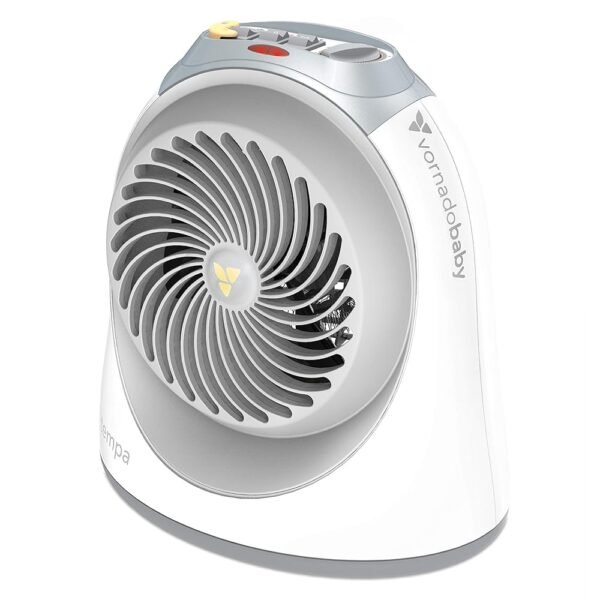
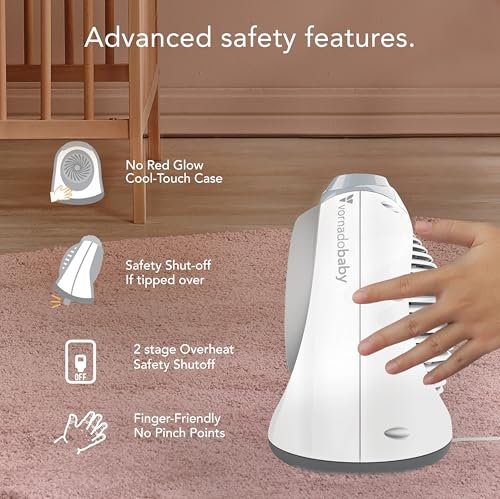
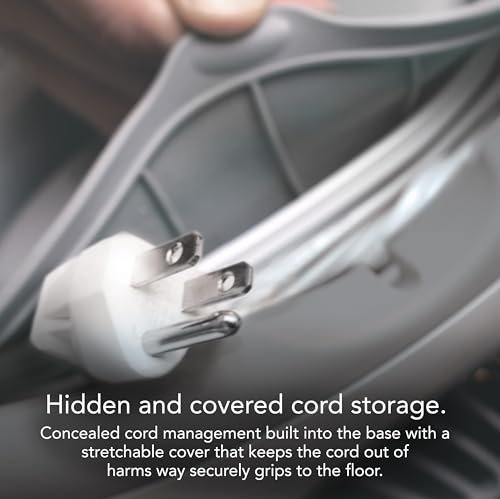
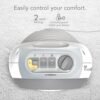
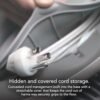
The Tempa Nursery Space Heater is built small on purpose. At 7.5 inches deep, 10.1 inches wide and 10.9 inches high, it occupies roughly the footprint of a shoebox, which is the relevant number in a nursery where the floor is already committed to a cot, a changing table and a chair. The cool-to-the-touch exterior is the spec that separates a nursery heater from a general-purpose one: it is designed on the assumption that a toddler will eventually put a hand on it. The concealed cord management system follows the same logic, keeping the lead off the floor and out of the walking path.
Features
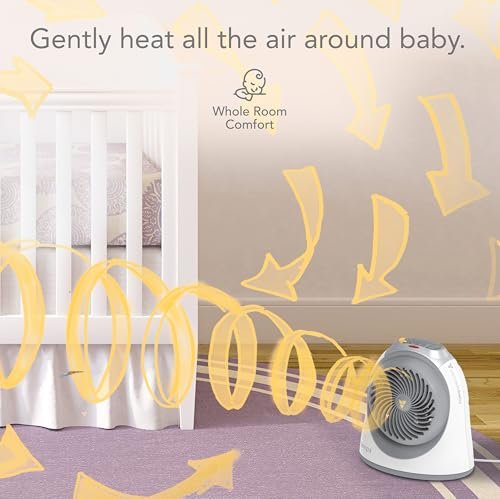
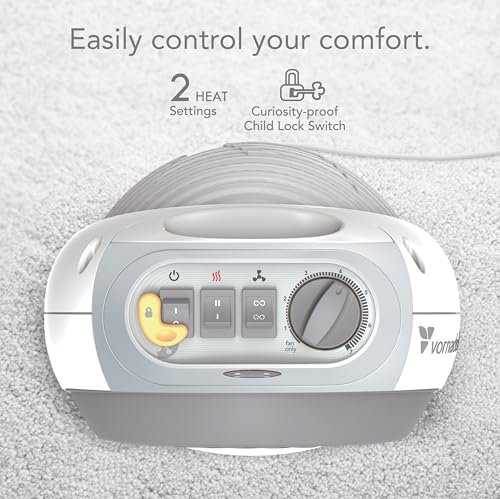
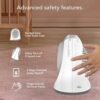
The feature list is built around families rather than raw output. Child-lock controls, tip-over protection and an automatic safety shutoff are all listed as standard, and together they are why this model gets specified for a child’s room rather than a workshop. The adjustable thermostat and the two fan settings, auto and continuous, cover what a nursery actually needs: a temperature that holds overnight, and a choice between steady circulation and cycling. Holding a set point is also what prevents a small sealed room from turning stuffy. The hidden cord storage with a stretchable cover is a minor addition on paper and a meaningful one where a trailing cable is a hazard.
Maintenance
Upkeep is simple in principle: the smooth exterior wipes clean by hand and there is nothing to disassemble. The recurring complaint in owner feedback for this style of heater is dust and pet hair collecting around the vents, and the Tempa is not exempt. The fan and coils sit behind a grille that is awkward to reach with a cloth, so a vacuum brush attachment or a dusting tool is the practical answer, and households with pets should expect to do it more often than the manual implies.
Noise
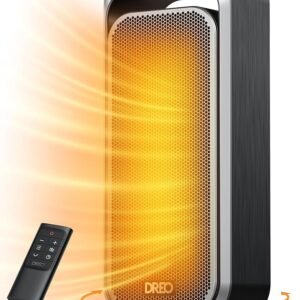
Low noise is one of the stated design goals, and it is the single most important attribute in a nursery heater, because a unit that wakes a sleeping baby will simply stop being used. Fan-forced heaters cannot be silent, so the realistic expectation is a soft continuous hum rather than nothing at all. Buyers who want that hum reduced further tend to look at quiet-focused models such as the Dreo DR-HSH007, which builds its whole pitch around acoustic output.
How To Use
Setup is short: plug it in, set the thermostat, then choose a fan setting, continuous for steady circulation or auto for cycling. The child lock is engaged with a single button press, which locks out the settings so that nothing changes if the panel is pressed. The tip-over protection needs no user action; it cuts power when the unit leaves upright. The control layout is deliberately plain, which is appropriate for a device that gets adjusted half asleep at two in the morning.
Performance
The rating is spaces up to 100 square feet, and that is the honest boundary of what this heater is for. A hundred square feet is a nursery, a small bedroom or a study, not a living room, and the unit is sized to hold that volume rather than rescue a cold open-plan space. Two heat settings plus a fan-only mode is the full range, enough for a room where the goal is a steady mild temperature rather than a rapid swing. For a comparable personal-sized unit outside the nursery category, the Lasko MyHeat 100 occupies the same small-space niche at a lower output.
Safety
Safety is where the specification is genuinely differentiated. The cool-touch exterior, tip-over protection and high-temperature safety shutoff are three independent mechanisms, and the rounded edges and wide base are the passive equivalent, making the unit harder to knock over in the first place. Read together, the list points to a product designed backwards from a child’s room rather than a general heater with a child lock bolted on.
Usability
Day to day this is an uncomplicated device. The controls are direct, and the locking feature means an accidental press does not silently change the set point overnight. The low weight makes it realistic to move between a home office during the day and the nursery at night, and the concealed cord storage means moving it does not leave a cable trailing behind. Parents who want the same portability in a general-purpose unit often compare it with the Vornado VH202 personal heater.
Warranty
The 5-year Happy Parent Guarantee is the standout line on the spec sheet. Five years is well beyond the one-year term that dominates this category, and a warranty of that length is a reasonable proxy for how long the manufacturer expects the unit to last. Published customer feedback on the brand’s support process is broadly positive, which matters more than the headline term, since a long warranty is only worth what the claims process delivers.
Positives
Here are the strong points the specification supports:
- Safety Features: Child lock, cool-touch exterior, tip-over protection, and automatic shutoff.
- Quiet Operation: Low acoustic output, suited to nurseries or workspaces.
- Compact Design: Doesn’t take up much room and includes cord storage.
- Efficiency: Warms small spaces while maintaining consistent temperatures.
Negative Attributes
Despite its merits, there are a couple of caveats worth mentioning:
- Dust Accumulation: The fan and coils can gather a bit of dust and pet hair, requiring regular cleaning.
- Temperature Regulation: Some users noted that the temperature dial might not always reflect the exact room temperature, leading to slight overheating.
Market Rivals
Against plain ceramic heaters at a similar price, the Tempa’s separation is the safety stack and the acoustic target rather than raw wattage. Within the same brand, the Sensa model adds auto temperature adjustment and a timer, which is the upgrade path for parents who want the room managed rather than set manually; those larger models are generally bulkier and noisier, which is exactly the wrong trade in a nursery. Stepping outside the nursery line entirely, the Vornado VH200 is the whole-room version of the same air-circulation approach, sized for a bedroom rather than a cot-side position.
Worth Every Penny
Weighing the feature list against the price, the value for money case rests on the safety hardware and the five-year term rather than on heating power. Cheaper heaters exist in volume, and what they generally drop is precisely the child lock, the cool-touch shell and the long warranty. For a buyer whose priority is a small room that stays at a steady temperature with a child in it, that is the right set of things to pay for. Anyone weighing a nursery unit against a general-purpose one will find the trade-offs laid out across the wider electric heater category.