


Description
Features
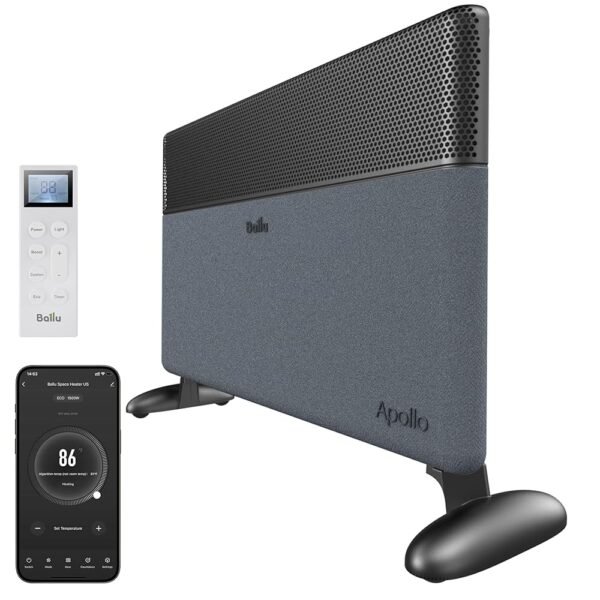
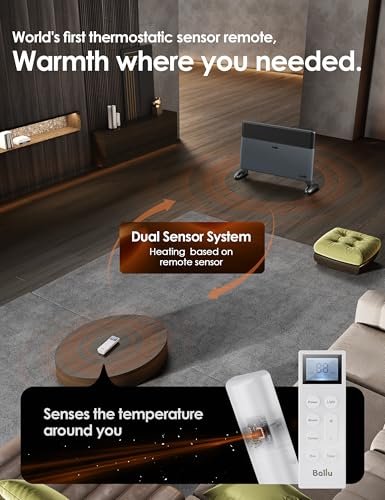
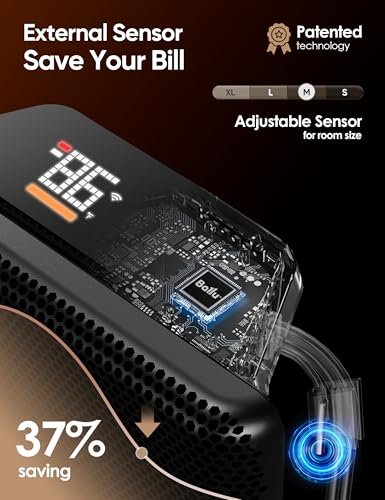
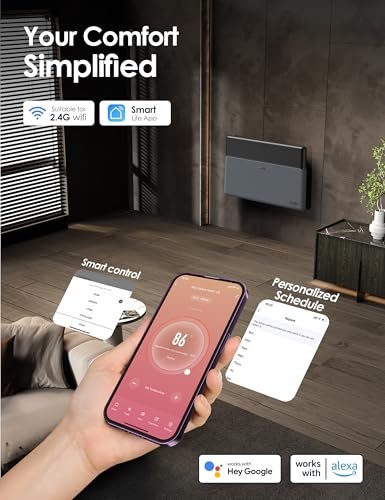
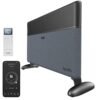
The Ballu Convection Panel Space Heater, model NCA1-4.5-PRO FABRIC BLACK, is specified well above the norm for a panel heater. The patented Hedgehog Heating Element is the headline item, built from aerospace-grade aluminium, with a claimed 30 second heat-up. On a convection panel that number describes how fast the element reaches temperature rather than how fast a room does, a distinction worth holding on to when comparing it against fan-forced units. The dual temperature sensor system is the more interesting spec: two sensors let the unit read conditions at the heater and at the remote, which is how a panel heater avoids overshooting when the thermostat sits in the wrong place. Alexa integration and a Wi-Fi app round out the control side.
The LED remote is included alongside the app, which is the right call, since app-only heaters become unusable the moment the network drops. Eco mode and a manual thermostat cover the two ways owners actually run a panel heater: a managed set point for efficiency, or a fixed level held all evening. A wall-mount option ships with the necessary accessories, and mounting is the format’s natural home. Buyers who want the same platform in a lighter finish will find it on the fabric white version of the NCA1-4.5-PRO.
Safety
The safety specification is thorough: overheat protection, tip-over protection and a flame-retardant power cord. The fabric cover does double duty, contributing to the appearance while keeping the front surface temperature lower than bare metal would run, which is the relevant property in a home with small children or pets. The 24-hour timer belongs here as much as in the feature list, since the most common risk with any panel heater is being left running unattended.
Usability
There are three control paths here: the remote, the app and touch controls on the unit itself. That redundancy is the practical advantage, since a heater that can be adjusted from the panel does not become a paperweight when a phone is elsewhere or the router is down. Setting temperatures and switching modes are single-step operations on all three.
The app is the part that gets the most attention in owner feedback, both directions. Adjusting the set point without leaving the sofa is the obvious appeal, and the room condition notifications are a genuine addition rather than a gimmick. The recurring criticism is the app’s forced landscape orientation on tablets.
Design
The flat panel profile is the defining physical trait: it sits close to a wall or in a corner without projecting into the room, which is why this format suits a living room better than a boxy fan heater. The build is light and rides on wheels, so relocating it between rooms is a push rather than a lift.
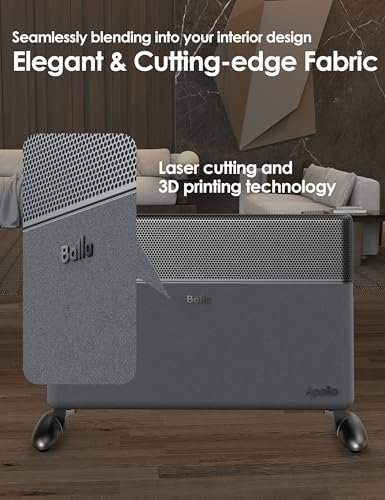
The fabric black finish is the styling decision that separates this from the industrial look most heaters default to. It reads as furniture rather than as an appliance, which matters in a room where the heater is visible year round.
Noise
Convection panels have no fan, and that is the whole acoustic story. Heat rises off the element by natural circulation, so there is no airflow noise, no motor and none of the clicking that cheaper thermostats produce as they cycle. This format is the quiet option by construction rather than by tuning, and no fan-forced heater matches it.
Maintenance
Upkeep is minimal. A periodic wipe-down is the whole routine, and the fabric cover resists dust better than an open metal grille. There are no filters, no consumables and no serviceable parts, so ownership cost after purchase is electricity alone.
Performance
A room of roughly 250 square feet sits within the range this unit is sized for, and the behaviour to expect differs from a fan heater. Convection warms a room by circulating air naturally, so the temperature climbs steadily rather than sharply and holds evenly once it arrives. Larger spaces stretch it, as they stretch any single plug-in unit. Eco mode is the setting most owners settle on.
Even distribution is the format’s real advantage: there is no need to sit in front of the unit to feel it, because the whole air volume comes up together rather than a beam of warm air crossing the room. Buyers comparing panel designs directly should look at the De’Longhi HCX9115E convection panel and the wall-mounted ENVI EM1012P, which take the same approach with different control sets.
Noise
Worth restating because it drives the buying decision for many owners: this heater is effectively silent in normal use. There is no hum or buzz during the day and nothing to break sleep at night, which is the most common reason buyers move away from ceramic and fan-forced designs.
Bang for the Buck
Weighed against the feature list, the safety hardware and the build, the price is defensible rather than cheap. Less expensive heaters exist in volume, and what they leave out is the refined casing, the dual sensor control, the smart integration and the efficiency of a managed set point. Anyone weighing panel heaters against ceramic or radiator formats can compare them across our electric space heater reviews.
Market Rivals
Against oil-filled radiators and ceramic models, this one separates on warm-up speed and versatility. Oil radiators are bulkier and take considerably longer to reach temperature, since the heat goes into the oil first, while the convection element here is designed to come up in seconds. Ceramic heaters warm a room quickly too, but they do it with a fan, and they rarely match this level of finish or quiet.
Higher up the market, the Dyson AM09 Hot + Cool brings bladeless engineering and a year-round cooling mode, at a substantially steeper price. Within Ballu’s own range, the NCA1-4.3 white panel is the more affordable entry point for buyers who do not need the PRO model’s smart controls.
Positives
- The Hedgehog Heating Element ensures rapid and efficient heating.
- Dual temperature sensors for personalized comfort.
- Completely silent operation, even on higher settings.
- Versatile design: freestanding or wall-mounted options.
Shortcomings
- The app’s landscape mode on tablets could use improvement.
- The back panel heats up significantly, which might require caution during wall mounting.