


Description
Features
The Ballu NCA1-4.3-WHITE convection panel space heater carries a substantial specification for its format. With a heating capacity of up to 1500 watts, it is rated for primary heating in spaces up to 250 sq. ft. and as a secondary source for areas exceeding 500 sq. ft., which is the usual honest split for a panel heater: it can hold a bedroom on its own, and it can take the edge off a larger room alongside central heating. The headline component is the patented Hedgehog Heating Element, built from aerospace-grade aluminium with corrugated fins that increase surface area and, by the manufacturer’s rating, begin delivering warmth within 30 seconds.
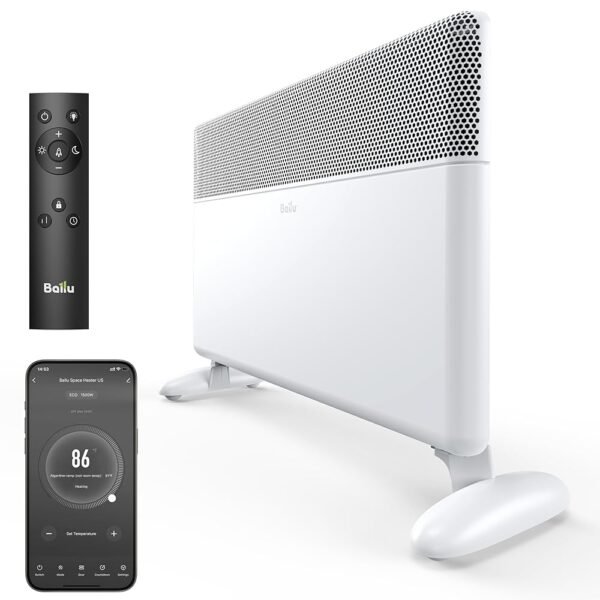
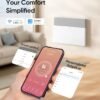
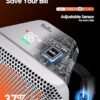
A programmable thermostat covers a 50°F to 86°F range, which is wide enough for frost protection at the bottom end and a genuinely warm room at the top. An exposed temperature sensor feeds that thermostat, and the manufacturer puts the resulting energy saving at up to 37%. The three control routes, digital panel, remote control, and a Wi-Fi enabled app, are more than most panel heaters offer, and the practical benefit is that a wall-mounted unit never has to be reached in person to change a setting.
Design
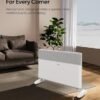
The moon-white finish is the visual selling point, and a flat panel is the least intrusive shape a heater takes: it can sit against a wall like a radiator instead of occupying floor space like a tower. That flat panel design is also the most versatile, supporting both portable standing and wall-mounted setups from the same unit. At 13.22 pounds it is light enough to reposition without help, and the slim profile suits a small study as readily as a larger living room. Buyers weighing formats across our electric space heater reviews will find the panel category is where portability and permanent installation overlap most cleanly.
Casters for mobility and wall-mount accessories are both included, and installation requires no tools. One point worth planning around before mounting: the back of the unit runs hot during operation, which rules out some non-concrete wall surfaces without a clearance gap.
Usability
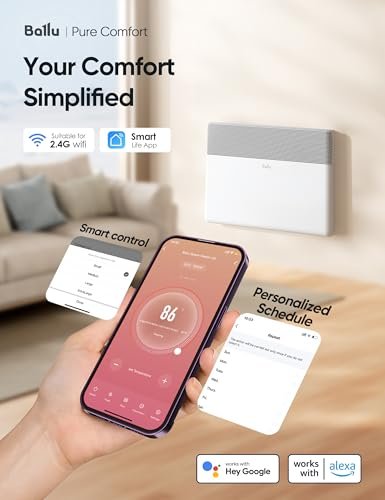
Operation is straightforward. The digital display is bright and legible in dim lighting, and switching between eco, normal, and manual modes is a single-button affair. The remote is responsive, and the app integration is what turns this from a heater into a scheduled appliance: a heating schedule set for early mornings removes the decision entirely, which is the point of buying a connected unit rather than a dial-controlled one.
The child lock is a meaningful inclusion in a household where settings would otherwise be fair game, and the tip-over and overheat protections cover the two standard hazards. Together they make this a defensible choice for a family room rather than only a home office.
Noise
Convection panels have no fan, and that is the structural reason this heater runs silent. Fan-forced units buzz or click because a motor and a thermostat relay are working; here there is neither in the airflow path. For nurseries, bedrooms, and home offices, that silence is the clearest advantage the panel format holds over ceramic towers.
Maintenance
Upkeep is low-effort by design. The smooth panel surface dusts in seconds, and there are no exposed heating elements for dirt to settle into. There is no filter to replace and no oil to top up. One caveat drawn from owner feedback rather than the spec sheet: several reports mention the plug and cord running warm, so periodically checking both is worth building into the routine.
How To Use
Getting started takes minutes. Unbox, plug in, and select a mode. For wall mounting, the included hardware handles it without tools. The app supports Alexa integration, which brings voice control into the picture for anyone already running a smart home, and the scheduling function is what makes it useful on chilly mornings when the room needs to be warm before an alarm goes off.
Eco mode is the setting most owners settle on, balancing consumption against effective heating. The 24-hour timer covers the other half of the problem, capping how long the unit runs when nobody remembers to switch it off.
Safety
Safety hardware here is thorough. The flame-retardant casing and V0-rated power cord are rated specifications rather than marketing claims, which matters in a household with children and pets. Smart tip-over and overheat protection cover the two failure modes that account for most heater incidents, cutting power the moment the unit leaves vertical or the casing temperature climbs past its limit. The child lock adds a third layer that specifically addresses curious hands reaching the control panel.
Performance
The rated figures line up with the format. In a 200 sq. ft. bedroom, moving from around 60°F to a comfortable 72°F inside half an hour is consistent with what 1500 watts delivers in a reasonably sealed room. The Hedgehog Heating Element spreads output across a wide fin surface rather than firing it in one direction, which is why convection panels avoid the cold spots that plague directional heaters. In a larger living room the same unit takes longer and works as a supplemental source, exactly as the over-500 sq. ft. secondary rating implies.
Thermostat accuracy is a strong point, with owner reports tracking closely against separate room thermometers. The recurring caveat remains the rear panel temperature, which is worth accounting for in any wall-mounted installation.
Key Benefits
- Rapid heat-up time of just 30 seconds.
- Quiet operation suitable for bedrooms and offices.
- Multiple control options, including Wi-Fi and app integration.
- Energy-efficient design with potential savings of up to 37%.
- Child lock and safety features for family-friendly use.
Caveats
- The back of the heater gets very hot during operation, which might not be ideal for certain wall types.
- The app, while functional, could use improvements in user interface design.
- Some users have reported occasional overheating of the plug, so it is worth monitoring.
Competitive Options
Against other formats, the Ballu differentiates on connectivity and shape. An oil-filled radiator such as the De’Longhi HCX9115E convection panel delivers consistent heat but takes up more floor space and offers less in the way of control. The ENVI EM1012P is the closest wall-mounted comparison, quieter to install but without the app and remote layer. Higher-end fan units add air treatment features at a considerably higher price and without silent running.
What separates the Ballu is the balance of efficiency, safety, and control at a mid-range price. Anyone considering it should also weigh the step-up NCA1-4.5 PRO and the mica-based NCA2-4.3 from the same range, which trade different features against the same footprint.
Price Worthiness
On features against asking price, the NCA1-4.3 sits comfortably in its bracket. The claimed energy savings are what make the case over a season rather than at the till. Cheaper panel heaters exist, but they typically drop the app connectivity, the child lock, or the rated flame-retardant construction, and those are the specifications that justify the gap. For a buyer weighing function alongside how the unit looks on a wall, the trade is a reasonable one.