





Description
Design
The Ballu Convection Panel Space Heater, model number NCA1-4.5-PRO FABRIC WHITE, is built around a flat form factor that sits against a wall rather than occupying floor space. The fabric white finish gives it a minimalist look closer to a piece of furniture than an appliance, which is much of the argument for choosing a panel over a tower. At 13.62 pounds it is light enough to reposition without help, and the unit ships with both wall-mounting hardware and portable standing options, so the same heater can be permanent in one room or moved between several. The caster wheels handle repositioning in freestanding mode, and the LED display with touch controls keeps the panel face clean.
Features
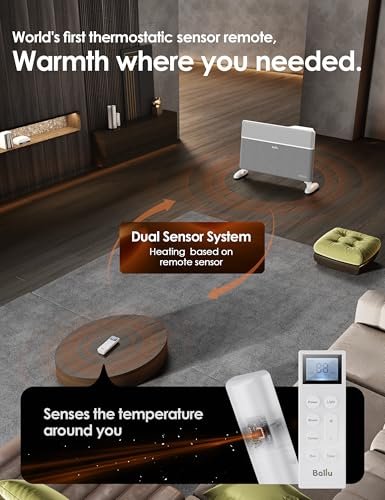
The feature list here is unusually deep for a panel heater. The Hedgehog Heating Element, made from aerospace-grade aluminium, is rated to begin warming a room within 30 seconds and is specified for a service life measured in decades under normal use, a claim a solid-state element can plausibly support since there are no moving parts to wear out. The dual temperature sensor system is the more practical feature: with sensors in both the heater and the remote, the thermostat regulates to the temperature where you are sitting rather than at the wall, which is where single-sensor heaters get it wrong. Wi-Fi connectivity and Alexa compatibility add voice and app operation to the on-unit panel.
Performance
The published ratings put this unit at primary heating for a 250 sq. ft. bedroom and supplemental duty in rooms over 500 sq. ft., and that split is the honest way to read a 1500 watt panel. Convection heating raises the whole air volume rather than firing a beam across a room, which is why panels avoid the cold spots directional heaters leave behind, though the trade-off is a slower climb in a large open space. ECO mode is the setting that matters for running costs, holding a consistent temperature at reduced draw rather than cycling between full power and off. The manufacturer puts the resulting saving at up to 37%, a figure that carries most weight over a full winter rather than on a single evening.
Usability
Setup and daily operation are straightforward. The digital display and remote are self-explanatory, and the app layer adds scheduling and power level adjustment for anyone who wants to set the heater once and forget it. The ability to switch between the unit’s own temperature sensor and the remote’s sensor is the feature that separates this from cheaper panels, since it lets the thermostat target the occupied part of the room. For a household where the heater covers a study or a child’s room during homework hours, that flexibility is worth more than the app itself.
Noise
A convection panel has no fan, and that is the whole reason this format runs silent. There is no motor in the airflow path and no relay clicking through the night, so the buzzing and ticking common to fan-forced and oil-filled units is absent. For bedrooms and home offices, that silence is the strongest reason to pick a panel over a ceramic tower.
Safety
Safety was clearly a priority in the specification. The unit carries overheat protection, a tip-over switch, and a 24-hour timer, which between them cover the three ways an unattended heater causes trouble. The tip-over switch cuts power the moment the unit leaves vertical, the protection that matters most around pets and children. The insulated alloy casing wrapped in fabric does double duty, giving the unit its finish while keeping the surface temperature low and the burn risk down.
Maintenance
Upkeep is light. The flat design wipes down with a cloth, and the absence of blades or fins removes the fiddly cleaning fan and radiator heaters demand. There is no filter and no oil reservoir, and the sealed panel gives dust little to settle in, worth noting for allergy sufferers. The one routine check is keeping the vents unobstructed, since a convection panel depends on unimpeded airflow to work as rated.
Warranty
The manufacturer provides a two-year warranty, a year longer than most of this category offers and a reasonable signal about expected service life. On a heater with no fan motor, the likely failure points are the control board and the thermostat rather than anything mechanical, and two years is enough to catch those if they surface early.
How To Use
Operation comes down to plugging it in and setting a target temperature. The controls behave the same way whether you use the on-unit digital panel, the remote, or the app, so there is nothing to relearn. Setting a target of 72°F from the app while seated is the everyday case. For wall-mounted use, the included accessories make installation quick and tool-free, and the hardware holds the panel securely once fitted.
Key Benefits
- Rapid heat-up in just 30 seconds.
- Quiet operation, well suited to bedrooms or workspaces.
- Dual temperature sensors for accurate heat control.
- Stylish, space-saving design with wall-mounting and portable options.
Areas for Improvement
- The back of the unit can get quite hot, which may necessitate additional precautions if wall-mounted on non-concrete surfaces.
- The app’s interface could use some refinement, particularly for tablet users, as it defaults to landscape mode, which can be inconvenient.
- Some users might find the initial cost a bit high compared to basic heaters, though the features justify the price.
Competing Products
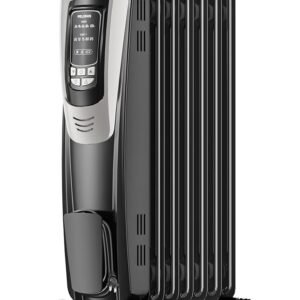
Against the rest of the market, this model stands on smart features and safety rather than raw output. Compared to traditional oil-filled radiators such as the PELONIS PHO15A2AGW, it is slimmer, lighter, and free of the crackling that oil units produce as they expand. Ceramic space heaters heat faster from cold in a small area but lack the control layer on offer here, and they run a fan to do it. Some ceramic models undercut it substantially on price, which will matter to cost-conscious buyers. Within the panel format itself, the De’Longhi HMP1500 mica panel is the closest simple alternative, while shoppers browsing the wider electric heater category will see how far the connected models have pulled ahead on features.
Quality for Price
The initial outlay is higher than for basic heaters, and the case for spending it rests on energy efficiency, the two-year warranty, and the control features rather than on heating capacity, which is capped at 1500 watts here as it is everywhere else. Over a season, the ECO mode and scheduling are what recover the difference. Buyers considering it should compare the standard NCA1-4.3 and the alternative finish on the NCA1-4.5 PRO, since the price gap between them often comes down to cosmetics rather than capability.