





Description
Features
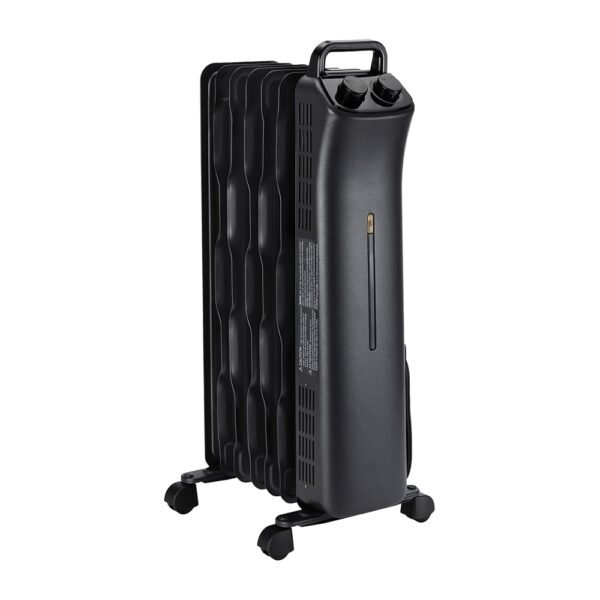
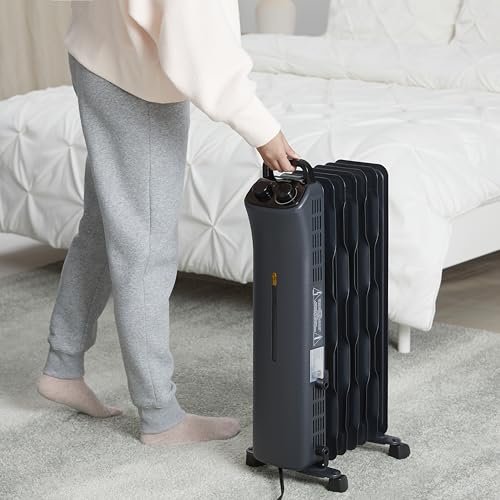
The Amazon Basics Oil Space Heater, model CY62RR-7, is specified around three heat settings: High at 1500W, Medium at 900W and Low at 600W. That spread is more useful than it looks, since an oil-filled radiator holding a room at 600W draws a fraction of what a fan heater running flat out does. The adjustable thermostat is a rotary dial rather than a digital control, dated but also the least likely part to fail. Seven oil-filled wavy fins do the actual work: the wave profile increases surface area, which is how a radiator without a fan spreads heat evenly. The absence of a fan also makes the unit near-silent, which is why this format dominates bedroom and office recommendations. Tip-over and overheat protection are both listed. For the same approach at a larger fin count, the Amazon Basics CY83RR-7 is the direct step up in the same line.
Maintenance
The maintenance story is close to nil, and that is a genuine advantage of the format. The oil inside the fins is permanently sealed, so there is nothing to refill, top up or replace over the life of the unit. Cleaning is a dry cloth over the fins, with no disassembly and no filters to buy. The one recurring complaint in owner feedback is the finish: a black exterior shows dust more readily than a white one, so a microfibre cloth kept nearby is a sensible habit rather than a chore.
Noise
This is the section where oil-filled radiators win outright. With no fan in the design, there is no airflow noise, no motor hum and no cycling whine, which is why this category is the default recommendation for bedrooms, nurseries and rooms used for calls. Fan-forced heaters cannot match it at any price, because the noise is a function of how they move heat.
Safety
The unit is ETL-listed, meaning the design was submitted to an independent testing body against published safety standards rather than self-certified. Tip-over protection cuts power if the heater is knocked from upright, and overheat protection covers the case where the unit runs for extended periods or has its airflow restricted. The relevant caveat with any oil-filled radiator is that the fins themselves get warm to the touch by design, since the surface is the heating element. That is warm rather than scalding, but it is a different proposition from a cool-touch ceramic housing, and it is worth knowing before placing one where a toddler will lean on it.
How To Use
Setup is plugging it in and turning the knob. The manual controls mean there is no display to learn and no configuration step. The practical technique with an oil radiator is to run the high setting until the room reaches temperature, then drop to Low and let the thermostat cycle, which holds the level at a fraction of the power draw. The limitation to plan around is that the thermostat knob carries no temperature markings, so the setting that holds a given room has to be found by trial rather than read off a scale. Once found, it does not need changing.
Design
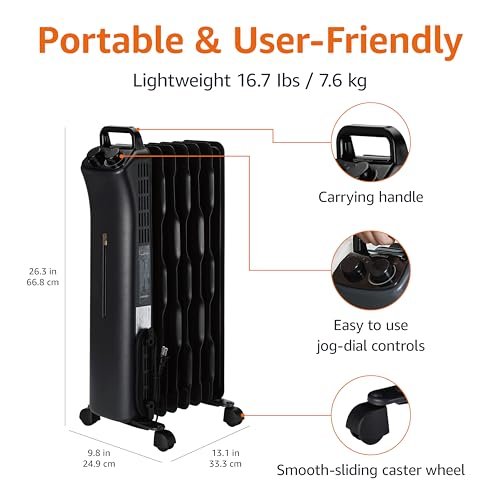
The black finish keeps the unit visually quiet in most rooms, which is not trivial on an appliance this size. Caster wheels and a carry handle are both included, and on a 15.41 pound unit the wheels matter more: this is a heater you roll between rooms rather than lift. That weight is heavier than the footprint suggests, and it is almost entirely the sealed oil, which is also what lets the unit keep radiating after the element cuts out. A cord holder is built in for storage.
Performance
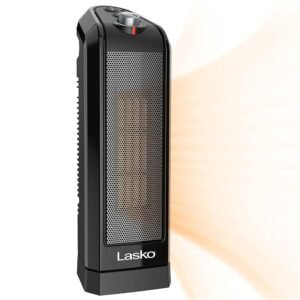
The coverage rating is 150 square feet, which places it in supplemental territory for a bedroom, a home office or a study rather than an open-plan living space. The behaviour of the format is the thing to understand before buying: an oil-filled radiator warms slowly and holds warmth long, because the heat goes into the oil first and radiates out afterwards. That means the room is not warm within a minute of switching on, and it also means the warmth persists well after the unit cycles off. Buyers who want rapid warm-up should be looking at ceramic or fan-forced designs such as the Lasko 5775 ceramic tower, and accepting the noise that comes with them.
Usability
Day to day this is a simple appliance, though simple is not the same as convenient. The manual controls are dependable but offer no remote, no timer and no digital set point, which is a real gap next to current models in the category. Some buyers will read that as outdated; others will read it as one fewer thing to break. The wheels and the cord holder cover the practical side. Anyone who wants the same silent radiator behaviour with a digital interface will find it on the De’Longhi TRD40615E digital oil radiator.
Strong Points
- Fanless operation, which suits bedrooms and offices.
- Built-in safety features, including tip-over and overheat protection.
- Energy-efficient oil-filled fins retain heat longer.
- Sleek black design with easy portability.
Drawbacks
- Takes time to heat up fully.
- Lack of precise temperature controls on the thermostat.
- Slightly heavy for its size.
- Black exterior attracts dust.
Competing Products
Against similar models the differences are mostly interface rather than output. De’Longhi’s oil-filled range adds digital displays and remote controls at a higher price, which buys convenience rather than heat. The PELONIS PHO15A2AGW sits in the same fanless radiator bracket and is the obvious cross-shop at this price. Confusingly, the COSTWAY CY62RR-7 carries the same model designation and the same seven-fin layout, so it is worth comparing the two listings side by side before ordering. Tower heaters warm a room faster but are noisier and less efficient at holding a temperature. Where the Amazon Basics unit wins is silence and simplicity; where it loses is modern features.
Cost-Effectiveness
For the price bracket the value case holds. It is not the cheapest heater available, but the sealed-oil design has no consumables and very little that can fail, so the ownership cost is essentially the electricity. Comparable radiators with digital controls and timers cost noticeably more for the same heat output, which makes this a reasonable balance of price and function for a buyer who does not need a remote. Anyone comparing radiator, ceramic and panel formats at the same wattage can work through the options in our electric space heater reviews.