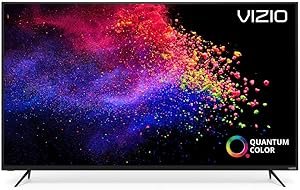


Description
A Deep Dive into the VIZIO M558-G1 M-Series Quantum 4K HDR Smart TV
The VIZIO M558-G1 M-Series Quantum 4K HDR Smart TV is aimed at the buyer who wants a cinema feel in a living room without paying flagship money. What sets it apart on paper is the panel technology. Equipped with Quantum Dot technology, it is rated for up to 80% more color volume than a standard 4K HDR TV, which is the specification that produces saturated highlights rather than washed-out ones. That colour headroom is what changes how films look on it. However, while the TV has some capable features, it is not without its quirks, and the sections below break them down.
Design and Build: Sleek Yet Sturdy
The sleek, minimalist design is the first thing to register. The flat panel display is encased in a slim, black bezel that gives it a modern and understated look. That works whether the set is wall-mounted or sitting on a stand. The dimensions, 48.59 x 10.04 x 30.6 inches, are typical for a 55-inch class panel and worth measuring against an entertainment centre before buying, and its 35.7-pound weight is a two-person job to lift into place.
The thoughtful part is the inclusion of TV stands, screws, and a power cord in the box, so setup does not stall on a missing fixing. However, the plastic TV legs, while stable, do not feel as premium as the panel they support. Wall-mounting is the better route if aesthetics are a top priority.
Picture Quality That Stands Out
The picture quality is where the money has gone. With Ultra-Bright 600 technology, the panel is rated for up to 600 nits of brightness, which the manufacturer puts at three times brighter than many competitors. That headroom is what HDR grading needs to separate a specular highlight from a bright surface. The Active Full Array backlight with 90 local dimming zones is the other half of the equation, since dimming the backlight behind dark areas is how an LED panel reaches deep blacks. On dark scenes, that zone count is what preserves shadow detail that flatter backlights lose.
Dolby Vision HDR support is another standout feature. Dolby Vision carries scene-by-scene metadata rather than a single fixed curve, which is why it opens up a broader spectrum of colors and details on compatible material. Whether the content is an action blockbuster or a quiet indie film, the format handles both. One thing to keep in mind is that brightness targets differ between HDR and non-HDR sources, so the perceived level shifts when switching between them. The VIZIO V-Series 50-inch 4K UHD set supports Dolby Vision on cheaper hardware.
Smart Features and Streaming
This TV does not rely on visuals alone; the platform is a real part of the package. VIZIO SmartCast 3.0 is straightforward to navigate, with Netflix and Hulu available directly rather than through an external box. The built-in Chromecast and Apple AirPlay 2 support cover screen mirroring from both major phone ecosystems. Sharing photos from an iPhone or throwing up a presentation needs no extra hardware.
The voice control options are another strong point. Support for Alexa, Google Assistant, and Siri means settings, channels, and power can all be handled by voice, which is unusual breadth at this price. It is not only convenient, it removes the remote from most routine tasks. The inclusion of VIZIO WatchFree, with access to over 150 free channels, is a genuine addition. The content is not premium, but it is a useful fallback for casual viewing, and rival platforms such as the one on the Hisense 55 Inch A6 Series take a similar approach.
Positives
Reading across the specification, several key benefits stand out:
- Quantum Color technology delivers vibrant, lifelike visuals with up to 80% more color volume than standard 4K TVs.
- Ultra-Bright 600 ensures exceptional brightness and detail, even in well-lit rooms.
- The Active Full Array backlight with 90 local dimming zones enhances contrast and depth.
- Wide HDR support, including Dolby Vision, HDR10, and HLG, provides flexibility for various content types.
- SmartCast 3.0, built-in Chromecast, and Apple AirPlay 2 make streaming and sharing effortless.
- Hands-free voice control adds real convenience.
Critiques
While this TV has a lot going for it, it is not without a few areas for improvement:
- The plastic TV legs feel less premium and could be sturdier.
- Brightness levels shift noticeably between HDR and non-HDR content.
- Remote control design is somewhat basic and lacks backlighting, which can make it hard to use in dim lighting.
Competing Products
Set against competitors such as the Samsung Q60T QLED and the LG NanoCell 85 Series, some interesting contrasts appear. The Samsung Q60T offers comparable Quantum Dot technology, but it carries fewer local dimming zones, which costs it black level and overall contrast. On the other hand, the LG NanoCell 85 handles motion better, which makes it a strong contender for gamers, and the LG 55-Inch UR9000 Series sits in the same size class.
However, the VIZIO M558-G1 holds its ground on value. Its 90 local dimming zones and Ultra-Bright 600 technology put it ahead of both competitors on brightness and contrast figures, which is what film watching rewards. That said, Samsung and LG offer more polished user interfaces, which might appeal to those prioritizing ease of use.
Bang for the Buck
On price performance, this TV delivers a lot of specification for the money. The combination of Quantum Dot technology, HDR support, and SmartCast functionality is hard to match at this level of the LED and LCD TVs category. The software is less refined than on high-end models, but the picture quality and versatility are where the budget clearly went.
For anyone seeking a mid-range 4K HDR TV that punches above its weight on visuals and smart features, this is a strong choice. If a premium build or a highly polished interface matters more, the downsides will weigh heavier, and a step up to something like the Sony KD75X85K is the alternative.